- Home
- Smart meter rollouts
- Germany
Guide
Germany smart meter rollout (iMSys): status and targets
Germany's smart meter rollout runs under the Messstellenbetriebsgesetz (MsbG), reset by the GNDEW law in 2023. Metering operators must fit intelligent metering systems (iMSys) to consumers above 6,000 kWh a year and to larger generators. At 30 June 2026, 3.17 million of 54.1 million metering locations (5.9%) had one. In the mandatory cases the share was 26.1%.
See what’s happening
 What is an intelligent metering system (iMSys)? Berlin’s network operator explains (in German)Stromnetz Berlin · YouTube
 How the smart meter gateway works, from the federal security agency BSI (in German)Bundesamt für Sicherheit in der Informationstechnik · YouTube
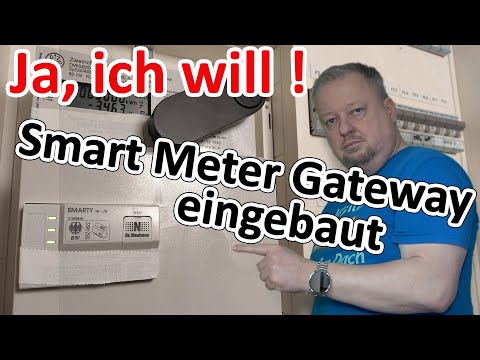 A network operator fits a smart meter gateway at home (in German)gewaltig nachhaltig · YouTube
 The metering law (MsbG) explained simply (in German)Energiewirtschaft Einfach · YouTube
Two kinds of meter
German law separates two devices, and most confusion about the rollout comes from mixing them up:
- Intelligentes Messsystem (iMSys). A digital meter plus a smart meter gateway that communicates. This is the smart meter in the usual sense, and the one the rollout targets count.
- Moderne Messeinrichtung (mME). A digital meter without a gateway. Under § 29 (3) MsbG, every other metering point must have at least an mME by 31 December 2032.
The rollout is the job of the grundzuständiger Messstellenbetreiber, the default metering operator. As ZfK puts it, that is usually the local electricity network operator.
Who must get an iMSys
Under § 29 (1) MsbG, an iMSys is mandatory for:
- consumers using more than 6,000 kWh a year;
- consumers with a controllable device agreement under § 14a EnWG, such as a heat pump or wallbox, together with a control unit;
- generation plants above 7 kW installed capacity, together with a control unit.
Everyone else can be fitted with an iMSys where it is economically justifiable under § 30. Since January 2025, any customer can also request one, and the operator must in principle install it within four months.
The milestones
§ 45 (1) MsbG sets the shares that operators must reach for consumers in the mandatory cases:
| Deadline | Requirement |
|---|---|
| 31 December 2025 | At least 20% of all metering points to be equipped |
| 31 December 2026 | At least 90% of the points to be newly equipped between 25 February 2025 and the end of 2026 |
| 31 December 2028 and 2030 | At least 90% of the points to be newly equipped in each two-year window |
| 31 December 2032 | At least 90% of all metering points to be equipped |
Generation plants have their own schedule, based on installed capacity, also ending at 90% by the end of 2032.
What consumers pay
§ 30 MsbG caps the annual charge for an iMSys and splits it between the network operator and the consumer. For a household using 6,000–10,000 kWh, the cap is €120 a year, of which €80 is paid by the network operator and €40 by the consumer. An optional iMSys, below the mandatory thresholds, is capped at €60, split €30 and €30. Higher-consumption bands and larger plants pay more.
Where the rollout stands
pv magazine reported the Bundesnetzagentur's latest half-yearly figures on 22 September 2026:
| Measure (30 June 2026) | Figure |
|---|---|
| Metering locations reported | 54,135,202 |
| With an iMSys | 3,172,579 (5.9%) |
| iMSys added in the first half of 2026 | about 765,000 |
| Share in mandatory installation cases | 26.1% |
The 20% target for the end of 2025 was missed by many operators. The Bundesnetzagentur began supervisory proceedings against 434 companies in March 2026. Of those, 77 had not installed a single iMSys. The regulator has since closed 150 proceedings, for example where the operator reached the quota later. Large operators did better on average than small ones: 29.7% for the 19 operators with over 500,000 metering locations, against 19.2% for the 591 with fewer than 30,000.
What this means for field teams
The next milestone is 90% of newly due points by the end of 2026, and small operators are furthest behind. That makes installation capacity the constraint. Operators without enough crews of their own can contract the work out, which raises the same questions as every outsourced rollout: who installed what, where, and with what evidence.
An iMSys install also has more parts than a meter swap: the meter, the gateway, often a control unit, and a working connection before the job counts. Each needs a serial, a photo and a status. PIEBENCH captures these on an offline Android app, with installation verification before work is reported and integrations to pass completed jobs on. Plans start at $199/month.
How to read these numbers
- 5.9% and 26.1% measure different things. The first is the share of all metering locations. The second is the share of the cases where the law makes an iMSys mandatory, which is what the § 45 milestones measure.
- Half-yearly data. The Bundesnetzagentur collects rollout data twice a year. We update this page after each release.
For other countries, see the smart meter rollout tracker.
Built to integrate with your systems
HES, MDM, SAP IS-U, Oracle CC&B and billing systems, over REST, OAuth or a direct SQL connection. How integrations work
Questions buyers ask
How many smart meters are installed in Germany?
At 30 June 2026, 3,172,579 of 54,135,202 metering locations had an intelligent metering system (iMSys), 5.9%, according to Bundesnetzagentur figures reported by pv magazine. In the mandatory installation cases the share was 26.1%.
Who has to get a smart meter in Germany?
Under § 29 MsbG, an iMSys is mandatory for consumers using more than 6,000 kWh a year, for consumers with a § 14a EnWG controllable device agreement, and for generation plants above 7 kW. Others can request one.
What is the difference between iMSys and mME?
An iMSys (intelligentes Messsystem) is a digital meter with a communicating smart meter gateway. An mME (moderne Messeinrichtung) is a digital meter without a gateway. Only the iMSys counts towards the smart meter rollout milestones.
What are the German smart meter rollout targets?
Under § 45 MsbG, metering operators had to equip at least 20% of mandatory metering points by the end of 2025, and must reach at least 90% by 31 December 2032, with 90% milestones in between for the points to be newly equipped in each period.
How much does a smart meter cost in Germany?
The annual charge is capped by § 30 MsbG. For a household using 6,000–10,000 kWh a year the cap is €120, of which the consumer pays €40 and the network operator €80. An optional iMSys costs the consumer at most €30 a year.
Sources
- Messstellenbetriebsgesetz § 29: Ausstattung von Messstellen
- Messstellenbetriebsgesetz § 30: Preisobergrenzen
- Messstellenbetriebsgesetz § 45: Rollout-Ziele
- pv magazine: Smart-Meter-Rollout kommt langsam voran (22 September 2026), reporting Bundesnetzagentur figures
- ZfK: Bundesrat bestätigt Änderungen für schnelleren Smart-Meter-Rollout (16 February 2025)
Free trial · no card
See it with your own crew
Start a free trial, or ask us for a walkthrough of your rollout.